

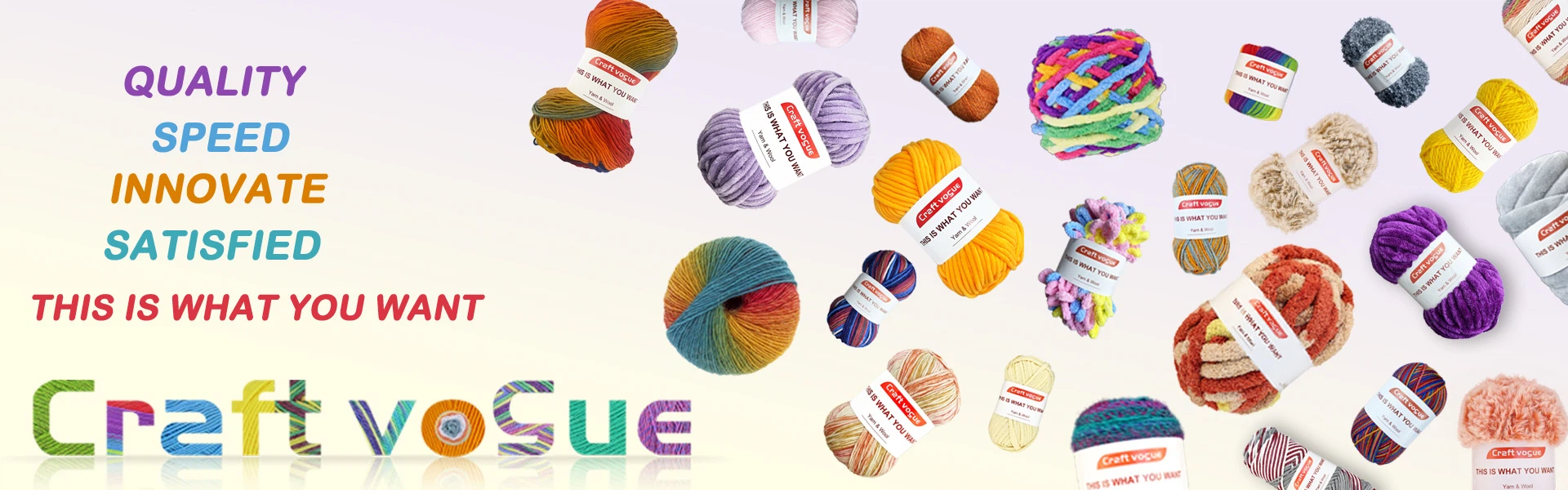
I. What is Velvet Yarn
Velvet yarn is a classic type of textured yarn. It is also commonly referred to as velvet yarn or chenille-style yarn in the industry. Its structure consists of a core yarn and a decorative yarn. The decorative yarn is processed by shearing to form fine tufts, and a single yarn can show a distinct woolen texture. This yarn can be directly used for fabric weaving, resulting in the familiar velvet fabric. It can also be used for nap-making, embroidery, fringes, and various hand weaving scenarios. Many overseas buyers often confuse "velvet yarn" with "velvet fabric", but in fact, the former is the raw material and the latter is the downstream product. As a yarn supplier, we sell the former, and after customers receive the yarn, they can produce the final fabric or product based on their weaving techniques.
II. Production Process and Core Technologies of Velvet Yarn
The production process of velvet yarn is not complicated, but it requires high equipment and process control. The typical process flow includes: core yarn feeding, decorative yarn winding, shearing and opening the nap, and twisting and shaping. The core yarn is usually made of polyester filament, cotton yarn, or nylon, providing strength; the decorative yarn is commonly made of viscose, acrylic, cotton, or recycled fibers. They are wound between two core yarns and then cut by a high-speed rotating blade to form upright nap fibers. The final step of heat setting is crucial as it determines the firmness and neatness of the nap. A good setting process can prevent the nap from falling off and maintain a fluffy and soft feel.
The nap length is generally between 0.8 millimeters and 3 millimeters. Home textile products prefer longer nap fibers, while clothing products require shorter and denser nap fibers. In terms of count, the common range is Nm 6 to Nm 30. Coarse counts are mostly used for sofa fabrics and carpets, while fine counts are used for knitted sweaters and scarves. Orders for export to Europe and the United States often require anti-static treatment, flame retardant finishing, and OEKO-TEX certification, which are all bonus items.
III. Main Components and Application Scenarios
The composition of velvet yarn is very flexible. Different blending ratios determine the feel and application. The pure polyester version has the lowest cost, the best wear resistance, and the highest color fastness, and is mainly used in sofa covers, curtains, and car interiors, which require high durability. The polyester and viscose blended version has a gloss similar to silk and is moderately priced, most commonly used in women's clothing, evening gowns, and scarves. The acrylic and cotton blended version has a strong wool-like feel and a soft, warm texture, suitable for autumn and winter knitted fabrics, children's clothing, and hats. There is also a glittering version with gold and silver threads, with a significant reflective effect, specifically used for stage costumes, festival decorations, and high-end home textiles. In the past two years, environmentally friendly polyester and viscose blends have become increasingly popular. European brands particularly value GRS certification, and certified yarns have a significantly more stable conversion in inquiries.


IV. Why Choose Chinese Velvet Yarn Suppliers
The global production capacity of velvet and tweed yarn is highly concentrated in China. The three major industrial belts of Zhejiang, Jiangsu, and Shandong have formed a complete upstream and downstream chain. From raw material procurement to spinning, weaving, dyeing, finishing, to final packaging, all can be completed within one region, significantly shortening the delivery cycle. Chinese suppliers also have obvious advantages in cost control. For the same quality specifications, the prices are often more competitive than those from regions such as Turkey and India. More importantly, Chinese factories respond quickly to new fibers and environmental-friendly processes. For example, new trends such as recycled polyester and bio-based fibers, the leading domestic suppliers can generally follow and mass-produce them at the first opportunity. For overseas buyers, finding a reliable Chinese supplier is equivalent to obtaining triple guarantees of quality, delivery time, and price.


