

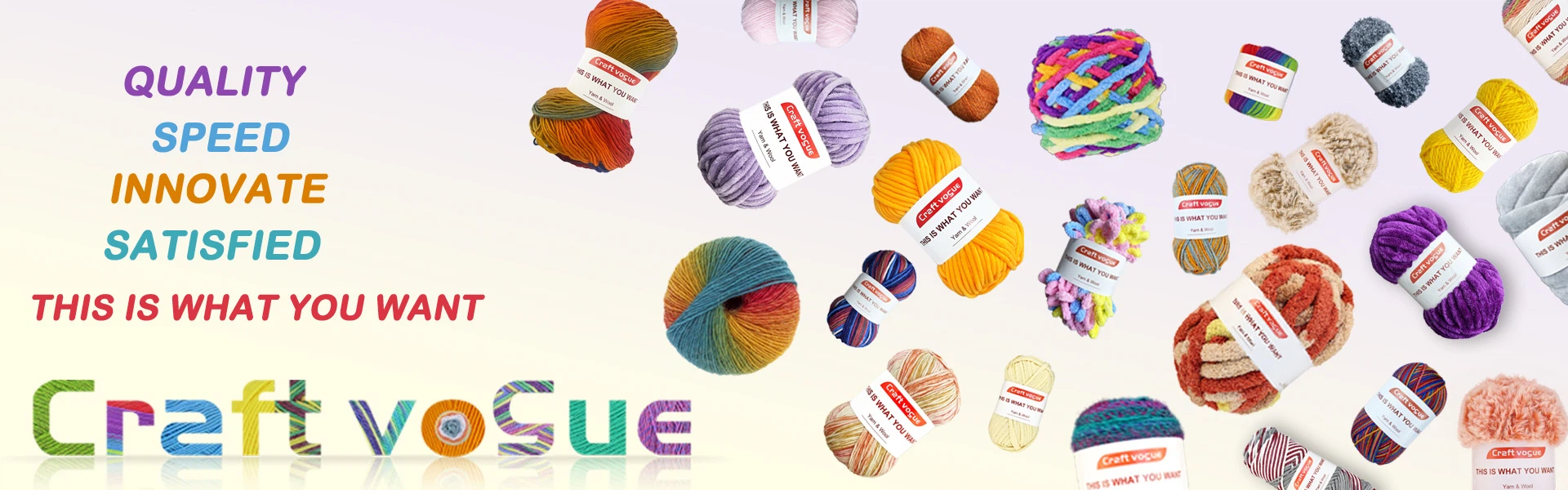
Several factors make acrylic fiber a popular choice. It can be made similar to wool, but there are some differences. Both fibers have advantages and disadvantages.
Price
The price of acrylic fiber varies, but it is usually cheaper than similar wool yarn.
Color Options
Acrylic fiber can easily be dyed into various bright colors. Compared with wool, it is usually easier to find the desired tone in acrylic fiber.
Wool naturally has a series of beautiful natural colors, so you can get a series of brown and gray, even without dyeing the fiber. However, wool that is not white becomes more difficult to dye.
Acrylic fiber can maintain color well. Color fading or running problems will be reduced.
Clothing care
Clothes made of acrylic fiber are easier to wash than those made of wool fiber, because acrylic fiber will not stick together.
You can't throw the wool fiber into the washing machine unless it is super-washed - forget the dryer!
Acrylic fiber and wool sometimes pilling. This depends on the length of fibers in the fabric and the type of fabric. Mixing different fibers in the same fabric will also lead to more pilling.
Wool usually requires hand washing or a mild wool procedure in the washing machine. Special detergent may be needed, and some clothes need to be laid flat and dried.
Fiber properties
Both fibers can be made into warm clothes, but wool can keep warm even in wet conditions.
Wool clothing is more breathable.
Acrylic fiber can imitate other fibers except wool, and has a wide range of uses.
Allergic problems
Allergies to acrylic acid are extremely rare, but allergies to wool or lanolin (a fatty substance in wool) are more common.
Complaining that sweaters are itchy may be due to allergies. In this case, it is useless to choose softer wool. Use acrylic in sweaters.
Environmental and animal welfare issues
For vegetarians, animal-derived fiber is not an option. Whether the animal from which the fiber comes is properly treated.
People worry that large-scale fiber production may mean animal welfare problems, and the price will rise as consumers demand transparency and locally purchased fiber.
Acrylic fiber is a synthetic fiber made from non-renewable resources. The manufacturing process is not very environmentally friendly (from the perspective of the environment, there are other synthetic or semi-synthetic fibers better).
Acrylic fiber will release small plastic particles during washing, which may lead to the generation of micro-plastics in the ocean.
In a word, I think the attraction of acrylic is low cost, good color selection and easy care of the clothes produced. When weaving for others, this garment is easy to care for and is unlikely to cause problems for allergic people or vegetarians, which is a huge advantage.


